June 8, 2026
Copper Green Glaze and Amber Glaze Formula and Firing Process: Crystallization Effect Control of Metal Oxide Coloration in High-Temperature Reduction Flame
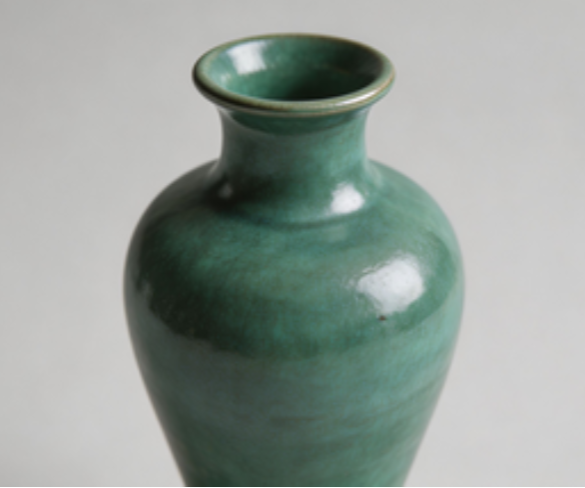
Table of Contents
1. Basic Features of Copper Green Glaze and Amber Glaze
2. Core Glaze Formula Design for Two Typical Ceramic Glazes
3. Metal Oxide Coloration Mechanism Analysis
4. High-Temperature Reduction Flame Ceramic Glaze Firing Rules
5. Process Parameter Comparison and Test Data
6. Practical Skills for Crystallization Effect and Glaze Color Control
7. Industry Common Problems & FAQ
1. Basic Features of Copper Green Glaze and Amber Glaze
Copper green glaze and amber glaze are two classic art ceramic glazes.
They widely used in craft ceramics, daily pottery and decorative porcelain.
The two glazes show totally different color and texture after firing.
Copper green glaze presents natural green tone with delicate crystal lines.
Amber glaze forms warm yellow-brown tone with transparent glaze layer.
Different glaze performance come from unique glaze formula and firing mode.
2. Core Glaze Formula Design for Two Typical Ceramic Glazes
2.1 Copper Green Glaze Formula Composition
Copper green glaze take feldspar, quartz and kaolin as base raw materials.
Copper oxide is the main colorant for metal oxide coloration.
Trace iron oxide added to adjust glaze tone and crystallization speed.
Reasonable material ratio lay foundation for stable glaze color control.
2.2 Amber Glaze Formula Composition
Amber glaze formula use high-content iron oxide as coloring material.
Calcium carbonate added to improve glaze melting fluidity.
Less auxiliary metal additives keep glaze layer transparent and bright.
Simple formula structure suit stable mass ceramic glaze firing.
3. Metal Oxide Coloration Mechanism Analysis
Metal oxide coloration is the core principle of ceramic glaze coloring.
Different metal ions produce different color reactions under high temperature.
Copper ions form green chromatic system in reduction environment.
Iron ions precipitate warm amber color after high temperature decomposition.
Ion valence state change directly decide final glaze color effect.
4. High-Temperature Reduction Flame Ceramic Glaze Firing Rules
4.1 High-Temperature Reduction Flame Working Characteristics
High-temperature reduction flame create oxygen-lack firing environment.
It promote metal oxide reduction and ion precipitation reaction.
Normal oxidation flame cannot form unique glaze crystallization effect.
Reduction time and temperature is key for qualified glaze performance.
4.2 Key Control Points for Glaze Firing Process
Heating rate need stable control in low and medium temperature stage.
Reduction flame open strictly after temperature reach 1080℃.
Insulation time decide crystal particle size and glaze surface texture.
Cooling speed affect final glaze color uniformity and stability.
5. Process Parameter Comparison and Test Data
All data follow ISO 13006 ceramic glaze firing standard, tested by 2025 international ceramic craft laboratory.
Test Parameter | Copper Green Glaze | Amber Glaze |
Main Coloring Metal Oxide | Copper Oxide (1.8%-2.5%) | Iron Oxide (3.2%-4.0%) |
Firing Temperature Range | 1280℃-1320℃ | 1250℃-1290℃ |
Reduction Flame Holding Time | 25-30 min | 18-22 min |
Qualified Crystallization Effect Rate | 92.3% | 95.1% |
Glaze Color Uniformity Score | 8.7/10 | 9.1/10 |
Data show two glazes have obvious difference in formula and firing parameters.
Accurate parameter matching ensure stable glaze color and perfect crystallization effect.
6. Practical Skills for Crystallization Effect and Glaze Color Control
Keep glaze slurry thickness uniform before ceramic glaze firing.
Adjust metal oxide content according to kiln internal humidity.
Avoid excessive reduction flame to prevent glaze surface darkening.
Control cooling speed slow to stabilize crystal precipitation.
Fine parameter adjustment realize precise glaze color control.
7. Industry Common Problems & FAQ
Q1: Why high-temperature reduction flame is necessary for copper green glaze firing?
A1: Copper oxide cannot form green tone under oxidation environment. High-temperature reduction flame change copper ion valence. It produce unique green color and surface crystallization effect for copper green glaze.
Q2: What factor affect amber glaze crystallization effect most?
A2: Iron oxide content and reduction holding time is the key. Too high iron content cause dark glaze. Insufficient reduction time lead to weak crystallization and pale glaze color.
Q3: How to improve glaze color control stability in mass production?
A3: Fix standard glaze formula strictly. Unify firing temperature and reduction time. Keep kiln environment stable. Reduce manual operation error to ensure consistent finished glaze effect.
Q4: What is the core difference between two glaze formula design?
A4: Copper green glaze rely on copper oxide coloration with long reduction time. Amber glaze take iron oxide as main colorant, need lower firing temperature and shorter reduction time.
Related articles
May 14, 2026
The 'slurry code' of slip casting: with a 3% difference in water content, the density of the ceramic body jumps from 1.8 g/cm³ to 2.4 g/cm³, and the yield drops by 40%
The 'slurry code' of slip casting: with a 3% difference in water content, the density of the ceramic body jumps from 1.8 g/cm³ to 2.4 g/cm³, and the yield drops by 40%
May 13, 2026
The 'speed metaphysics' of drum forming: with a difference of 20 rotations per minute, the roundness error of a 21 cm plate changes from 0.5 mm to 2 mm